Family: Lamiaceae (Mint)
Habitat: Moist places; wetland spaces (prairies, meadows, marshes,) thickets, and waterways (Corbett, 2022;) creek banks, floodplains, shores, wet ditches, and swamps. More broadly, part shade and moist to soils (MN Wildflowers.)
Native to: North America (MN Wildflowers,) a.k.a Turtle Island
Distribution: Across the NA continent, starting in Newfoundland, all the way to British Colombia, and then south of there from Georgia to California; mostly found in eastern North America (Corbett, 2022.) Found throughout most of Minnesota, especially in wetlands (MN Wildflowers.)
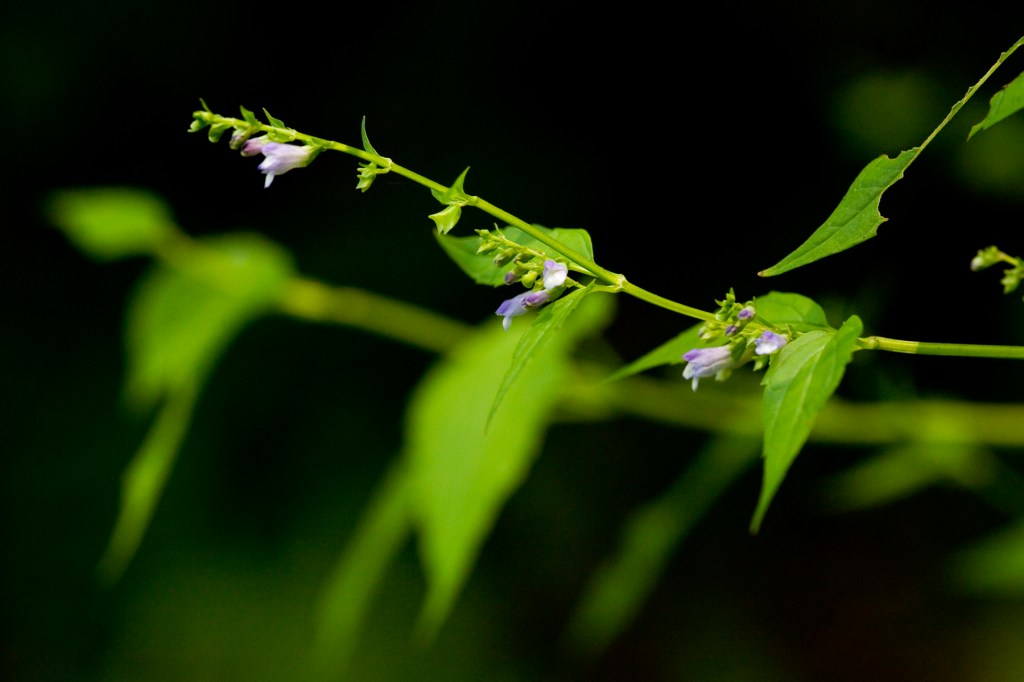
Botanical Description: Perennial herbaceous plant (Corbett, 2022.) Grows to 10-30in tall, having an erect, square stem (sometimes covered sparsely in fine hairs) with leaves up to 3in long and 1.5in wide. Leaves are “coarsely toothed,” and are lanceolate in shape, and rounded at the base (MN Wildflower.) Spreads via runners and rhizomes (Corbett, 2022.)
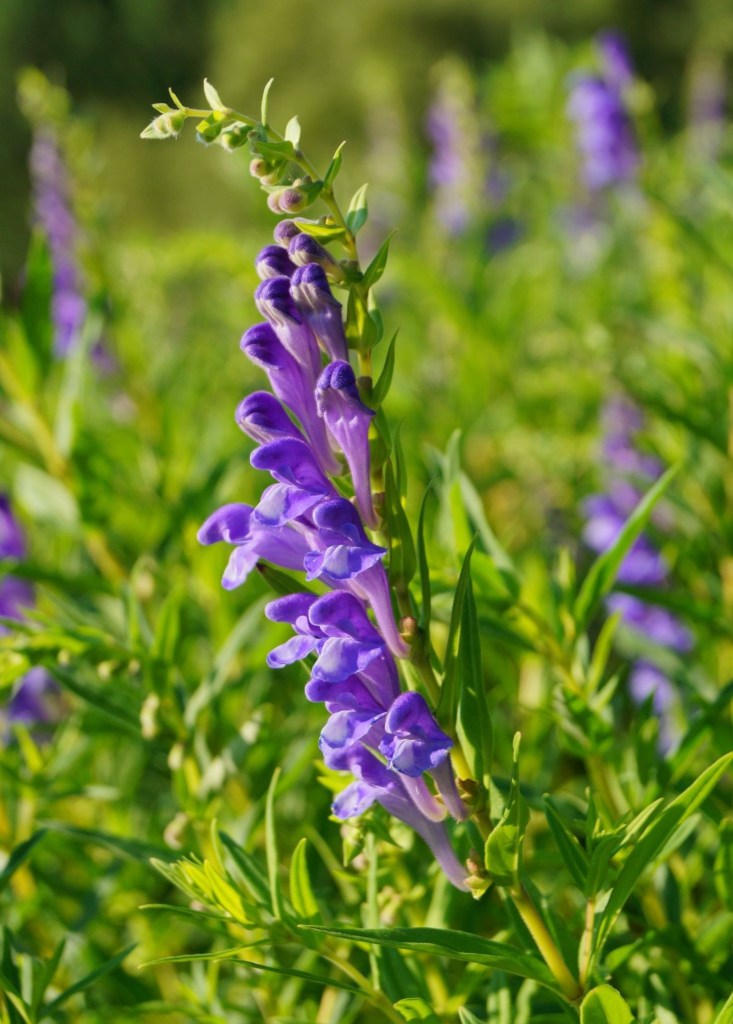
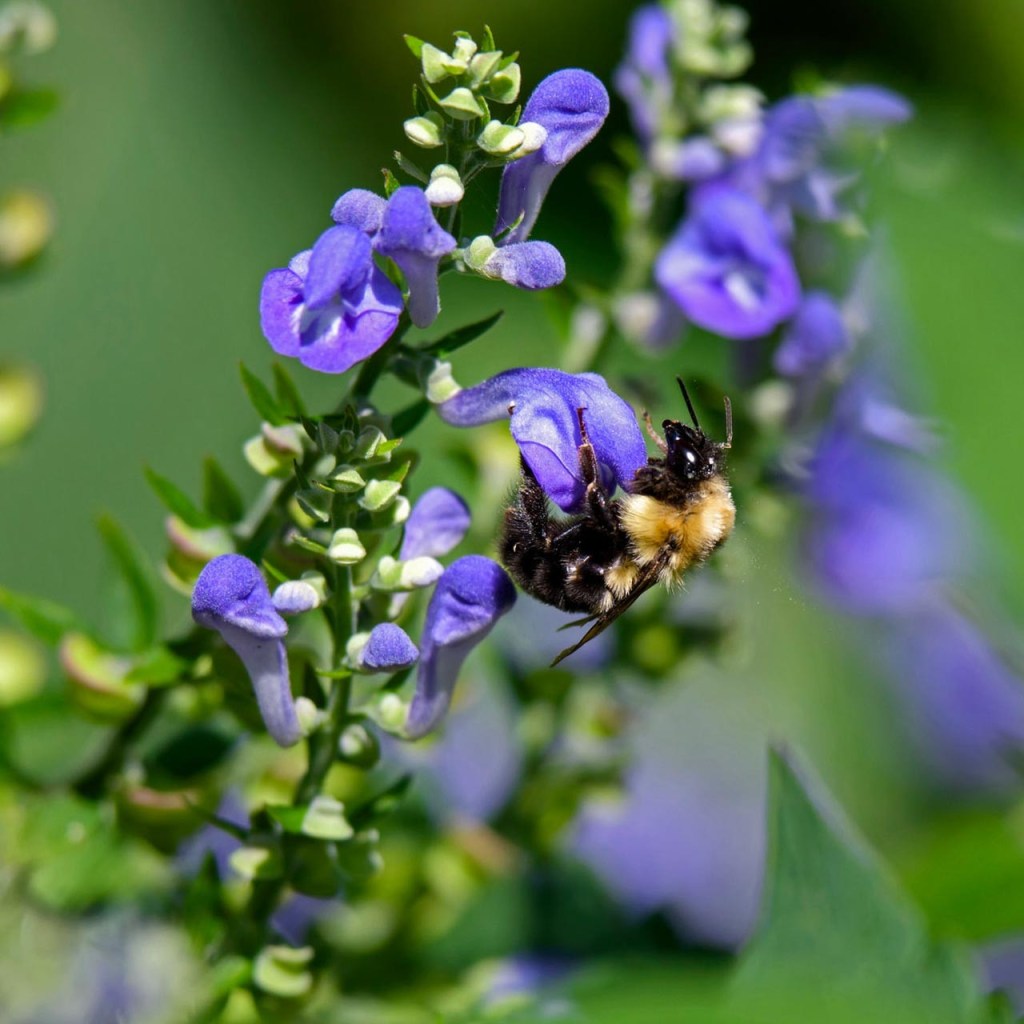
Flowers grow on the upper part of the plant in pairs, coming from the leaf axils. They range in size from 1/4th to 1/3rd of an inch long (MN Wildflowers.) They vary in color from blue to purple, and are shaped like small helmets.
“The blossoms have always reminded me of a group of spritely little birds screeching for food.” – Michael Moore (Corbett, 2022)
Parts Used: Aerial parts (Tierra, 2018;) roots have also been known to be used in some traditions (Corbett, 2022.)
Harvesting: Best time to harvest is in June (Grieve,) possibly due to it being right before the plant blooms. If only cutting back the top 2/3rds of the plant, and making sure to not disturb the roots, it will grow back abundantly (Corbett, 2022,) however it may only grow for 2-3 years (Grieve.)
Energetics: Cooling, drying (Corbet, 2022)
Taste: Bitter
Actions: Nervine, sedative, antispasmodic (Tierra, 2018;) analgesic, anti-inflammatory, anti-seizure, anxiolytic, astringent, bitter tonic, febrifuge, hypotensive, mild sedative, nervine trophorestorative, relaxant, slightly bitter, tonic (Corbett, 2022.)
Constituents:
- Flavonoids (baicalin, baicalein)
- Flavonoid glycosides (baicalin, lateriflorin, scutellarin, and more)
- Flavonoid algycones
- Some amino acids (glutamine, glutamate, GABA, and more)
- Iridoids
- Volatile oils & waxes:
- Monoterpenes (camphene, -pinene)
- Diterpenes (limonene, caryophyllene)
- Sesquiterpenes (-elemene, calamenene, -cadienene)
Planetary Ruler: The Moon
Within astrology and astroherbalism, the Moon governs many things that skullcap is associated with, such as:
- The digestive and nervous systems
- “Cool, damp, and shady” places, as well as near bodies of water
- Fragile, silver-green leaves and blue flowers (Corbet, 2022.)
Other Names: side flowering skullcap, American skullcap, American skullcap, blue pimpernel, blue skullcap, helmet flower, hooded willow herb, hoodwort, mad-dog skullcap, mad-dog weed, Virginian skullcap, quarter bonnet, grande toque, Quaker bonnet, toque bleue, toque casquée, ga ni qui li ski (Cherokee) (Corbett, 2022,) madweed (Grieve)
History:
S. Lateriflora’s first known uses are from the Cherokee and the Iroquois (BRIT.) The next prominent recorded historical use in Western herbalism is from American colonial medicine of the 1700s, as a remedy for rabies; this is where it received the moniker “mad-dog skullcap.” This idea was pioneered by a Dr. Lawrence Van Derveer, who said he treated thousands of rabies patients with it. This was later disputed by the Eclectics in 1852, who ended up completely dismissing its use for rabies. In 1919, Finley Ellingwood theorized that skullcap’s antispasmodic action could be helpful for a case of rabies, but would not be an effective cure.
In the 19th and 20th century, the Eclectics focused mainly on applying the herb in nervous system complaints. They used it for seizures and tremors, along with “heart disorders of the nervous type. It was recommended for “nervousness caused by illness, teething, and mental or physical exhaustion.” Intermittent fevers, as well as the twitching of tendons during low fevers, was another Eclectic use. Ellingwood talked about the French using it for “two distinct lines of specific phenomena;” one being nervous system irritability, and the other being for nervous disorders. It was also mentioned by the National Association of Medical Herbalists of Great Britain as a supportive herb for nervous system problems in the 1930s (Corbett, 2022.)
“It is not a remedy of great power, but when indicated it is of much service.” – Finley Ellingwood
Folk Use: There are two Native American tribes with recorded traditional usage of S. Lateriflora, the Iroquois and the Cherokee peoples. The Iroquois use it as a throat aid and a “miscellaneous disease remedy,” while the Cherokee have a wider range of applications. Some Cherokee uses include kidney aid, emetic, antidiarrheal, gynecological aid, breast treatment, and abortifacient (BRIT.)
The Cherokee people have also been known to use an infusion of the roots to support menstruation. They also used roots for diarrhea and relieving hormonally caused breast pain. Some constituents (ferulic acid, baicalin, and scutellarin) have displayed estrogenic actions in vitro, which could be the phytochemical reason behind this traditional application. In The Cherokee Herbal, J.T. Garrett says formulas for challenging respiratory conditions (i.e bronchitis) called for the entire plant (Corbet, 2022.)
Spiritual Use:
Author and Witch Juliet Diaz says skullcap is one of the strongest plant relaxants for the spiritual, as well as the physical body. She mentions it is “an excellent choice for transitioning between one state of being and another,” and is also supportive in committing to personal relationships. Diaz also says skullcap brings stillness into our lives that allows us to enjoy our own presence fully. She recommends it for someone who is on all the time and doesn’t make time for oneself; “[Skullcap] will show you what you are missing in the rush of it all, bringing clarity and perspective to what is truly important to you” (Diaz, 2020.)
In the herbal Plant Oracle deck, Dirt Gems, the Skullcap card is called “The Swarm Wrangler.” On a spiritual and physical level, this card expresses the act, or need of, learning to calm the buzz our nervous systems can carry when frazzled. In the Oracle Deck’s guidebook, it says skullcap “speaks the language of our nervous systems…guiding us with care and knowledge into more calm and available states.” It also reads, “Don’t be fooled by [Skullcap’s] delicate nature of its appearance,” as it has a “mighty impact.” The guidebooks’s passage on the herb ends with saying that this is a supportive herb for calming the mind and body, which allows us to relate better to others, along with saying skullcap is a valuable aid in most situations.
Modern Use:
Herbalist Maud Greive calls skullcap “one of the finest nervines ever discovered” (Grieve.) It is still used to this day as an “effective antispasmodic, nervine tonic, and sedative” herb (Corbett, 2022.) It is specifically indicated for supporting memory, mind and emotions; not limited to, but including, anxiety, depression, emotional shock, headache, migraines, nervous tensions, restlessness, sleeplessness, and stress (Burdett, 2011) In Traditional Chinese Medicine, it’s used for treating diarrhea, hepatitis, and inflammation (Diaz, 2020.)
Skullcap is also a very supportive headache and migraine ally, as it is a cerebral vasodilator. Specifically indicated for ones that are rooted in tensions of the neck and shoulders, are brought on by stress, or have a head-pounding symptom. It is also a good option for a daytime pain reliever since it is not highly sedative, but still able to reduce pain (it has the ability to inhibit the COX-1 and COX-2 inflammation response; hot water infusions are more impactful than alcohol extracts when it comes to this action) (Corbett, 2022.)
Herbalist Michael Tierra talks about skullcap being helpful in breaking addictions, particularly to “ease the problems associated with drug and alcohol withdrawal. He also says it can ease “premenstrual tension,” and that it strengthens the brain; he goes on to indicate it for the distinct use of “brain tonic for promoting meditation” (Tierra, 2018.)
Overall, skullcap seems to be regarded as an immensely helpful herb in calming and nurturing the nervous system and supporting digestive health.
Works Cited
Behrens, Julia et al. Neal’s Yard Remedies Healing Herbs: Treat Yourself Naturally with Homemade Herbal Remedies. DK Publishing (Dorling Kindersley), 2020, pp. 31.
BRIT – Native American Ethnobotany Database. naeb.brit.org/uses/species/3626.
Burdett, Anne Louise. Dirt Gems: Plant Oracle Deck and Guidebook. Illustrated by Chelsea Granger, 2nd ed., 2021, pp. 77.
Corbett, Sarah. (2022). Skullcap Monograph. Rowan + Sage Herbaria Membership. Retrieved from rowanandsage.com/herbaria
Diaz, Juliet. Plant Witchery: Discover the Sacred Language, Wisdom, and Magic of 200 Plants. Hay House, 2020, pp. 298.
Greive, Maud A Modern Herbal | Scullcaps. http://www.botanical.com/botanical/mgmh/s/scullc34.html.
Scutellaria Lateriflora (Mad-dog Skullcap): Minnesota Wildflowers. www.minnesotawildflowers.info/flower/mad-dog-skullcap.
Tierra, Michael. Planetary Herbology. Lotus Press, 2018, pp. 354-355.