Rose Family (Rosaceae)
Hawthorn has been in Europe and Eastern North America since the Eocene (55.8-33.9 million years ago,) which we know thanks to leaves of the Crataegus genus being found at an archaeological site in Colorado. (5) Worldwide, there are 382 different Hawthorn species (12); about 150 of those occurring in North America (19). In Minnesota alone, there are at least eight different native species, with six of those species occurring in the Twin Cities Metro. (Bolded species are ones growing in the TC area.)
- C. chrysocarpa – Fireberry Hawthorn
- Most common species in Minnesota
- C. douglasii – Black Hawthorn
- C. macracantha – Large-thorned Hawthorn
- Most common species in North America
- C. macrosperma – Large-seeded Hawthorn
- C. mollis – Downy Hawthorn
- Mainly found near Minnesota River in southwest and south-central areas
- C. punctata – Dotted Hawthorn
- C. submollis – Quebec Hawthorn
- C. succulenta – Fleshy Hawthorn
- TC Metro: mainly found in the western half (6)
Aside from native species, C. monogyna – Common Hawthorn, has also been introduced in Minnesota (13.)
Hawthorn Names
Anishinaabemowin/Ojibwe (general): miinensagaawanzh (15,) miinensagaawunj (16)
- C. chrysocarpa: Fireberry Hawthorn
- Aka: Round-leaf Hawthorn, Red Haw (6) matȟó tȟaspáŋ “bear-apple” (17) , tȟaspáŋ hú (1)
- C. macracantha: Large-thorned Hawthorn (7)
- C. monogyna: Common Hawthorn
- English: Hedgethorn, mayflower, whitethorn, haw berry, maybush, maythorn, haw
- Other:
- Danish: hvidtjørn
- Dutch: Haagdorn, haageduurn
- German: Hagedorn, weißdorn, meidorn
- Irish: sceach geal
- Norwegian: hagtorn
- Polish: głog
- Scottish: Sgìtheach (5)
Botany
Description
Hawthorns are small, dense, and woody perennial shrubs (6, 12) that, depending on species, can grow from 15 up to 50 feet tall (5.) The bark is generally scaly and dark gray, but can appear smooth and gray brown when younger. The branches are slender and gray, and true terminal buds are found on twigs, which are shiny, dark, and red. Most specimens have thorns, ranging from 1 to 3 inches long (12,) but some species like C. macracantha can have 4” long thorns (7.) Sometimes non-naturally occurring hawthorns (i.e. ones planted by cities on streets or in parks) have no thorns at all. Leaves tend to be alternating, with serrated edges, yet some species have lobed ones, and are dark green in color on the tops, and pale green on the bottom.
The flowers bloom sometime between mid to late spring, and grow in clusters of pink or white small flowers at the end of the twigs (12.) Flower group size varies by species, but it can span anywhere from 5 to 30 flowers in a cluster. It’s also worth noting that these flowers appear similar to those of many other Rosaceae plants (6.) Interestingly, the flowers are sweet in smell once they first bloom, but as they age they begin to release a chemical called triethylamine, which can smell like “gangrene, decomposing flesh, or sex;” the biological purpose of this is to attract the carrion insects hawthorn relies on for pollination (5.)
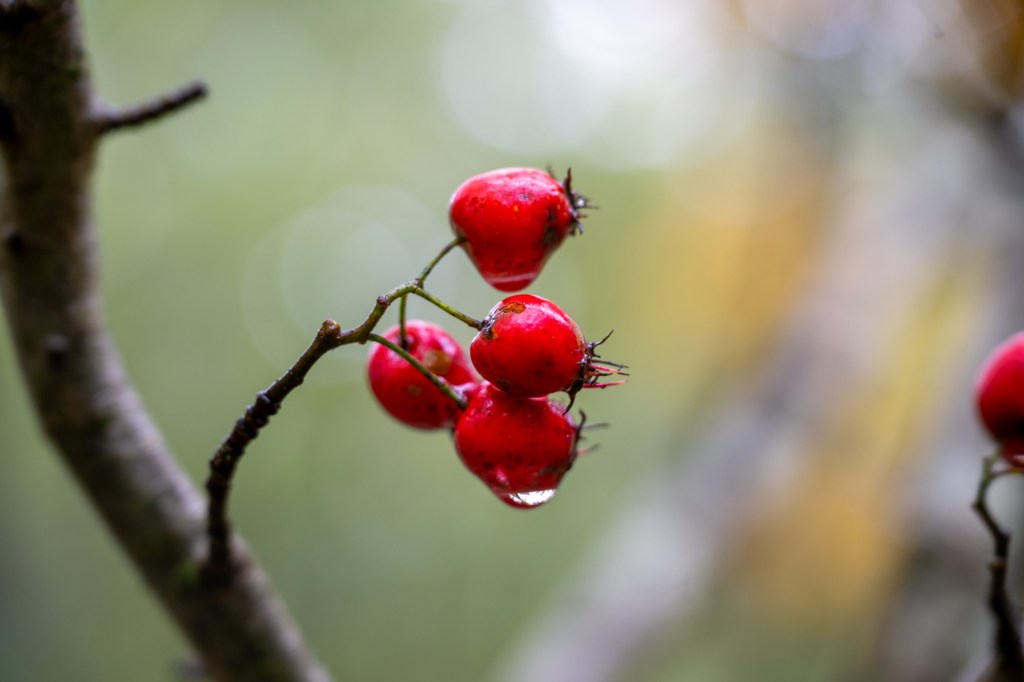
Come late fall, the fruit is fully mature and is red in color (12;) sometimes called a “berry,” but more accurately called a “haw,” these fleshy fruits can vary slightly in appearance. They are all red, while some may be shinier or matte-er depending on species, may have small hairs on the surface, may be round or oval-elliptic shaped, and may range from bright red to dark crimson (6, 7.)
Habitat & Distribution
Native Crataegus spp. can be found across the continental US, Canada (12,) North Africa, Central America, North America, Asia, and Europe. It can be found throughout temperate parts of the world (5.)
Grows best in full sun (results in a better fruit yield), but will tolerate part shade. Adaptable, but prefers moist, well drained loamy soil conditions. “Very tolerant” of urban pollution and grows well in these areas. Will grow in USDA zones 3-8 (12.) In Minnesota, species like C. chrysocarpa and macrantha can be found growing in pastures, fencerows, savanna, forest edges, wetland edges, riverbanks, thickets, deciduous woods, open woods, and floodplains (6, 7). In the Twin Cities, they can be found in some yards, parking lots, and parks.
Ecology
Hawthorns are a beloved food source and shelter for different birds. One fascinating (if not a little intense) behavior found in shrikes is the way they will catch small rodents, and drop them onto the thorns of the shrub as a hunting method (12.) They also aid in hawthorn seed dispersal via consuming the fruits.Other animals consume the haws, especially through the winter, so make sure to leave enough on the trees for everyone else! Nectar-feeding insects, birds, and mammals are the range of beings that this shrub is important for (5.)
Parts Used
It seems that all parts of this plant have recorded uses, however the parts most frequently used would be the flowers and the haws.
Harvesting
Depending on which part one is harvesting, the time of year to gather can be spring or autumn. For the flowers, collect these just after opening in the springtime. When the flower stamen tips are still pink, that means they are unpollinated; you can pick these instead of the other ones which will then allow the already-pollinated ones to fruit. For the haws, collection time is in autumn right before the first freeze; at this time, the haws will deepen in color. If harvesting leaves, this can be done at any time (as needed) during hawthorn’s growing season (5.)
Monograph
Preparations: Standard decoction, tincture, glycerite, fluid extract, solid extract (10); as well as syrups or other food-stuffs (i.e. jam); older sources speak of distilled hawthorn water (4.)
Energetics: cooling, moistening (10;) some consider it fairly neutral; also seen as cooling in Traditional Chinese Medicine (5)
Taste: sour, sweet (5)
Actions: Anti-inflammatory, antioxidant, antiarrhythmic, astringent (leaves,) cardiotonic, cardioprotective, cholagogue, cholertic, digestive, diuretic, hepaprotector, hypolipidemic, hypotensive, inotropic, cardiac trophorestorative, mucilaginous (berries), nervine, nutritive, trophorestorative, vasodilator, vasotonic (5;) antiseptic, cardiac, hypertensive (10;)
System Affinity: Cardiovascular system, nervous system, digestive system (5)
Primary Constituents:
Flavonoids (hypersoide, rutin, quercetin, vitexin,) triterpene acids (ursolic acid, oleanolic acid, crataegolic acid), epicatechin, catechin, proanthocyanidins (procyandidin B2, procyanidin clusters [DP 4, 5, 6]), phenols (chlorogenic acid, tannins,) vitamin C, vitamin, B, manganese, chromium, zinc, iron (white rabbit); hesperidin, myrictrin, tocopherols, tyramine, isovitexin, glycosides (flowers contain highest amounts), phenol carboxylic acids, amines, catechols (5)
Tissue States:
- Heat/Excitation
- Damp/Stagnation (5)
- Atrophy
- Relaxation (23)
Specific Indications
Hawthorn is indicated for irregular or intermittent pulse with increasing rate, dyspnea, nervous depression (10.) It was also indicated for palpitation and cardiac weakness, nervous depression, and dyspnea by the Physiomedicalist and Eclectic physicians of the late 19th/early 20th century (5.) Along with those specific indications, here is a list of some of what Matthew Wood’s Earthwise Herbal says the herb is indicated for:
- Red, dry, irritated skin (especially on the backs of hands, on the wrists, and up the forearms
- Red skin of palms and fingers (especially in the case of blanching)
- Red cheeks
- Attention deficit; where one can’t focus or sit down – restless, irritable, nervous
- Insomnia
- Allergies (sinusitis, specifically)
- Colds, bronchitis, asthma
- Hypertension
- Hypotension
- Cardiac arrhythmias (mainly extra systoles and acute tachycardia attacks)
- Weakness of myocardium and heart problems after illness (fever, flu, pneumonia, etc.)
- Excessive perspiration after acute illness, with weakness of heart
- Indigestion: heartburn, constipation, atonic lower intestine
- Nervous stomach
- Hypoglycemia (23)
Modern Uses (Western)
This herb truly shines in applications relating to heart health, both physical and mental. For best results on the cardiovascular system, it is recommended to take it on a regular basis. It is known to build up the heart muscle, and can improve cardiac function in cases of heart diseases, whether or not pain is present. Hawthorn has been utilized for its ability to improve the tone of heart muscles, boost circulation, dilate the vessels in extremities, improve the heart’s uptake in oxygen, and energize heart cells have been confirmed by studies performed around the world. It can also be helpful in reducing stress, which in turn will benefit cardiovascular health (10.) For the aforementioned applications, most recommend working with the haws. As much as it is a strong ally for the literal heart, many Western herbalists also know it to be a powerful herb for times of heartbreak and grief. This plant is also supportive in the case of digestion and nervous system concerns.
I personally use this herb regularly in my practice; I am deeply enamored with both the taste and personality of hawthorn, and think it is a great herb to have in an apothecary due to its safe and gentle touch, while also packing a lot of important medicine. My favorite use of this herb is probably for things that cause heartbreak/heartache (such as grief and trauma.) I also recommend trying out hawthorn jelly, which can be purchased from Red Lake Nation Foods (who can be found at TC Farmer Markets); it is delightful!
Indigenous Uses
C. chrysocarpa – Fireberry Hawthorn
I was able to find recorded uses for this specific species from the Blackfoot, Lakota, Ojibwe, Omaha, Ponca, Potawatomi, and Ho-chunk (aka Winnebago) peoples, which span the Great Plains and northern Midwest of the so-called United States. Most of the uses show the haws being consumed as a food item; sometimes in times of famine, or just as a common food (dried or fresh.) The Omaha peoples also make a beverage from just the twigs via hot water infusion. Records regarding the Potawatomi people mention that along with the people themselves, bears and deers like to consume the haws. Outside of that, there seems to be a focus on digestive applications of the fruits. The Blackfoot use dried haws in the winter as a mild laxative, while the Ojibwe apply it in the case of diarrhea (root decoction as an anti-diarrheal, to be specific.)
One piece of information about the Blackfoot people touches on an interesting mix of this herb being both a foodstuffs, as well as a plant that interacts with digestion. There are certain conditions they believe need to be met before harvesting and consuming, in order to make sure the fruits didn’t cause stomach cramps. They offer the shrub a gift (for girls: pair of miniature moccasins made from leaves, and for boys: a little arrow made from the thorns,) which is to be put on the tree before starting haw harvest; this ensures that the fruits don’t “bite the stomach” (2.)
Crataegus spp. (general)
Across various Indigenous groups on Turtle Island, different species of hawthorn have been employed in food and medicine. The Chippewa people utilize it (mainly as a root decoction) as an analgesic for back pain, a gynecological aid for “female weakness,” and a tuberculosis remedy. They also have consumed it as food by squeezing the haws and making them into small cakes which are dried and stored for use in the winter. Not only being consumed, they have also found uses for the thorns as awls for crafting (ie wood- and leatherworking.) The Comanche have records of the hawthorn haws being eaten, as well as the inner bark being consumed as a candy, similar to chewing gum! The little branches (without leaves) are combined with other plants as a gastrointestinal aid by the Iroquois, specifically for the case of “large stomachs” (uncertain if this means bloating or excess weight.)
Hawthorn also has gynecological uses from the Ojibwe peoples, but instead of the roots, they use the fruit and barks; apparently combined with other plants to make a medicine for “women only.” The Ojibwe also consume the haws as an autumnal food. Other non-consumption uses that this group has are, again, the thorns being used for crafting (either as awls or sewing needles, specifically sewing hide with sinew) and smoking the bark to attract deer while hunting (2.) In Ojibwe beading traditions, the hawthorn flower is commonly the first design young girls learn. The Anishinaabemowin name for May, Waabigwanii-giizis “the Moon of Flowers,” is apparently named after the blossoms of the hawthorn, which occur at this time of year (16.)
In the Lakota tradition, hawthorn is known as a heart medicine, or in čhaŋté phežúta Lakhota. The flowers and haws are utilized in cases of heart issues, muscular issues, and even muscular sclerosis. They also decoct and tincture fruits and flowers for high blood pressure and general heart concerns. Outside of direct medicinal use, they will sometimes use the haws as a flavorant to make other medicines taste better, as well as make a tea from boiling the twigs. Just like some other Indigenous groups mentioned, the Lakota have also utilized the thorns for sewing (1.)
Safety/Caution
As hawthorn is one of our food herbs, it is considered safe for long term use (10.)
Cultural
Hawthorn has a place in the hearts of many cultures around the world! In Mexico, the haws (called tejocotes) are stuffed into piñatas during the pre-Christmas celebration Las Posadas, and also the fruits are sometimes mixed with sugar to make a candy called rielitos. The haws are eaten raw as a snack or made into jelly in Iran. Some even believe it was thorns from this shrub that comprised Jesus’ famous crown of thorns (20.) Cuisine is not the only cultural space this herb occupies; as I mentioned above, it has a long history of being used in handicrafts by the Indigenous people of Turtle Island, as well as being used by the people of the Scottish Highlands long ago as a dye source. They combined the bark with copperas to create a true black, or “finest black” dye (22.) Interestingly in Serbia and Croatia, this plant was once believed to be deadly to vampires, with folklore saying stakes used to slay them must be made with hawthorn wood (22.)
There is no shortage of cultural relationship to this herb, but to cover them all would be a document unto itself, so for that reason, I chose to dive a little more into a lineage I have ancestral ties to. When it comes to this plant’s mythological or magical reputation, it has a distinct one in the British Isles (England, Ireland, Scotland, Wales, and the many small islands around these countries) being a “tree of ancient roots,” symbolic in both Pagan and Christian traditions (14.)
Magic, Myth, and Folklore
Around the British Isles, this shrub has been treated as an entrance to the “otherworld,” which is the realm the fae inhabit, which means hawthorn is strongly associated with these supernatural creatures. From that, it’s easy to understand why it is believed to be bad luck to uproot hawthorns (20,) lest you upset the fae, and have them come after you! We can find this herb in such famous British tales such as legends of King Arthur; there was a young girl, Vivian, who wanted the wizard Merlin to teach her everything he knew. Once she had learned almost everything there was to know, he taught her the final piece of knowledge – how to turn a man into a tree. As the story goes, she then turned Merlin into a hawthorn tree (20.) In Ireland, there are thousands of wild-growing (as in not planted or cultivated by humans) hawthorns around the country, which are seen as especially noteworthy in the Irish tradition (5.)
According to the Kilkenny Archaeological Society, hawthorn is “most representative of the struggles the christian church had in suppressing pagan beliefs and celebrations that it encountered.” This plant has been seen as a good luck charm when on one’s land, and even said to bring prosperity to the land it stands upon. There was a tradition in Ireland of planting a hawthorn in the same place a person experienced a bad accident, possibly as a charm to protect people their from future accidents. The Irish also believe, as I mentioned above, that cutting down or uprooting the plant brings bad luck, to the extent that they would divert roads in order to avoid having to remove the plant, as they did not want to bother the meeting places of the fey. The concern of bad luck with this plant didn’t stop there; people avoided bringing any part of the plant into the home, as they feared it could mean death for a household member.
Hawthorn was not only seen as unlucky or dangerous by the Irish, it also has long been revered, being called sacred in laws as far back as medieval times in Ireland. People believed the flowers helped their prayers reach heaven, and that the hawthorn was a guard for many springs and wells. In his article on hawthorn’s cultural significance, author Nicholas Maher includes various local legends relating to individual hawthorns in certain towns or parishes:
- Raggedy Bush (a.k.a. St. Patrick’s Raggedy Bush) in Kilkenny, Ireland is claimed to be a “relic of Celtic Mysticism.” Its name stems from the practice of people tying rags onto the branches as a form of prayer. This act’s origins are unknown, but are at least 100 years old. Legend has it that while St. Patrick took respite in the same spot the shrub now stands, a Celtic warrior, Finn McCool, walked up and (frustrated with the Saint’s efforts to convert the pagans,) tried to throw a large rock at his head. An angel warned St. Patrick, which allowed him to dodge the rock. He then instantly knelt to give thanks to God, and after that, his knees melted the ground beneath him, which gave way to where this hawthorn would grow.
- In Kilkeady, County Limerick, Ireland, there is a shrub believed to have grown from a thorn that Saint Ita pulled from a donkey’s hoof. The thorns on this hawthorn apparently only grow downward, which is also attributed to this legend.
- The “first” Glastonbury Hawthorn (C. monogyna ‘Biflora’, a species form that legend says only grows in England and Palestine) on Weary-All Hill in Isle of Avalon, Sommerset, England which is said to have sprouted from Joseph of Arimathea’s wooden staff he acquired in Palestine. Joseph is said to have sat down on this hill to rest, and when the staff rooted itself into the hill, it turned into a hawthorn. Supposedly, this tree only bloomed on Christmas day (this hawthorn’s name of biflora indicated that it blooms twice a year, so this could be true!)
There is also a significant hawthorn found at the center of Freestone Hill (just outside of Kilkenny), which happens to also be the site of a burial cairn. Archaeologists believe a cult-like community lived at this site, circa 4th or 5th century CE. Maher says that this hawthorn “has a spirituality about it,” as do the other legendary or special hawthorns he mentions. There was also a local legend that if a woman from (nearby parish) brings a young man for a walk to this hill, he will “have no chance of escaping marriage from her.” The land covering this hill is rich and abundant, which gives weight to the folk belief of “farmers who plant, respect, and protect the Hawthorn will be rewarded with rich soil” (14.)
Another interesting way that hawthorn shows up in nearly ancient Celtic culture is its place in the early medieval alphabet called ogham (sometimes also referred to as the “Celtic tree alphabet.”) While many neopagans and Wiccans have popularized it through potentially ahistoric divinatory uses, it was originally for writing Primitive Irish (from 4th–6th century CE) and Old Irish (from 7th-10th century CE) languages, as well as sometimes being used to record Pictish, an old language hailing from modern-day Scotland. The alphabet consists of small lines, oriented in various directions, that are drawn on a larger, horizontal throughline. The letters appear as if they are branching off this main line, which has led scholars to believe that is how the ancient Celtic peoples came to call it a tree alphabet. Out of the 26 letters of this alphabet (21,) the sixth letter is ᚆ or úath (pronounced as oo-ath, or oo-ah) and was used to represent an “H” sound (18.) Each letter of this alphabet has a corresponding tree (or sometimes plant,) and úath is represented by hawthorn (21.) In the ogham symbol for úath, we can see what looks like a thorn growing up from the branch, which could be an intentional choice from the peoples who created the writing system. One of the main meanings for ᚆ is fear, which reflects some of the magic and folklore of the Irish when it comes to hawthorn. Other interpretations attributed to this letter include challenge, horror, the fey, misfortune, threat, and death (18.)
Astroherbalism
This herb certainly shows duality; dainty, delicate flowers displaying gentle shades of pink juxtaposed with dark, long thorns and blood red fruits. And this is no different in its astrological correspondence. While Nicholas Culpeper lists hawthorn as a Mars herb, some herbalists see it both as a plant of Venus and Mars (5.)
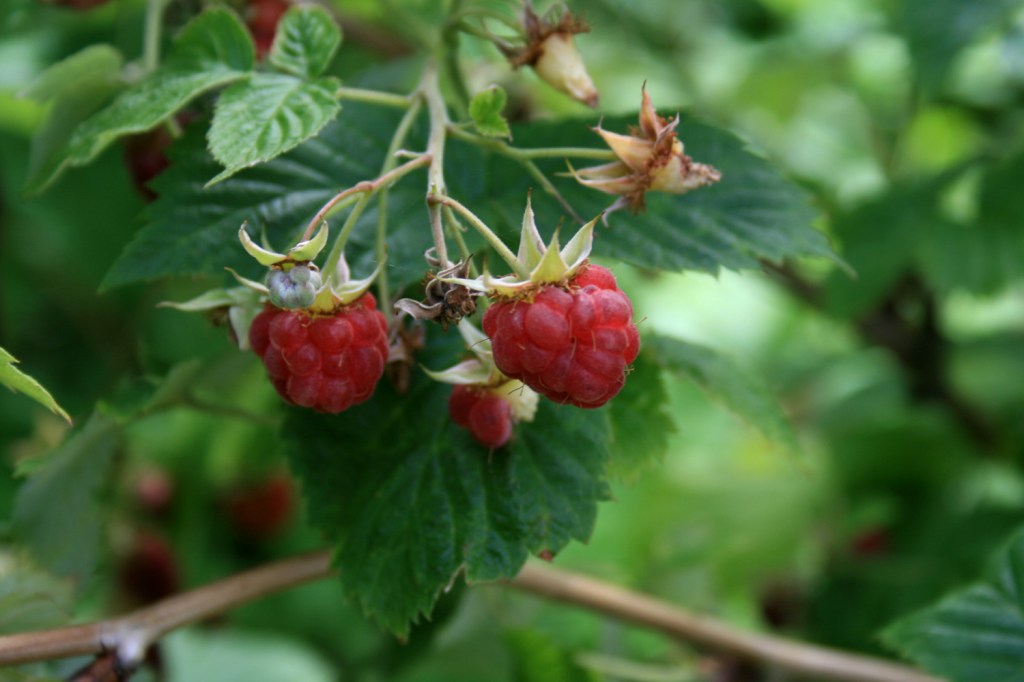
The case for both of these planets ruling hawthorn can be understood both botanically and medicinally. Being in the rose family, it is already in the favor of Venus (ie rose, apple, raspberry.) The 5-petaled flowers also show a Venus connection, as that is the number associated with this planet. However, thorns are under the domain of Mars, as they are sharp and can draw blood. This shrub can handle a variety of growing conditions; it prefers “the lushness of Venus,” but can withstand intense heats and droughts, making it “Mars hardy.” We can observe that it flowers in May, which starts during Venus-ruled Taurus season, while the berries come to maturation by the time Mars-ruled Scorpio season is in full effect.
Hawthorn’s place as a strong heart medicine also indicates this dual rulership (5;) Venus and Mars both have connections to the cardiovascular system. And this could even be extended to the non-physical heart! This herb’s place as an ally for grief shows that the sweetness of Venus is here to soothe the pain, while the thorns of Mars protect a person through a time of feeling raw.
Works Cited
1. Black Elk, L. S. (1998). Culturally Important Plants of the Lakota. Sitting Bull College. https://puc.sd.gov/commission/dockets/HydrocarbonPipeline/2014/HP14-001/testimony/betest.pdf
2. BRIT – Native American Ethnobotany Database. (n.d.). http://naeb.brit.org/uses/search/?string=crataegus&page=1
3. Burdett, A. L. (2024). Dirt Gems: Plant Oracle Deck and Guidebook.
4. Clarkson, R. E. (1940). Green Enchantment: The Magic Spell of Gardens.
5. Corbett, Sarah, Nelson, Sabrina. (2023). Hawthorn Monograph. Rowan + Sage Herbaria Membership. Retrieved from rowanandsage.com/herbaria
6. Crataegus chrysocarpa (Fireberry Hawthorn): Minnesota Wildflowers. (n.d.). https://www.minnesotawildflowers.info/shrub/fireberry-hawthorn
7. Crataegus macracantha (Large-thorned Hawthorn): Minnesota Wildflowers. (n.d.). https://www.minnesotawildflowers.info/shrub/large-thorned-hawthorn
8. Culpeper, N. (2004). Culpeper’s complete herbal.
9. Diaz, J. (2020). Plant witchery: Discover the Sacred Language, Wisdom, and Magic of 200 Plants. Hay House, Inc.
10. Easley, T., & Horne, S. (2016). The modern herbal Dispensatory: A Medicine-Making Guide. North Atlantic Books.
11. Griggs, B., & Van Der Zee, B. (1997). Green Pharmacy: The History and Evolution of Western Herbal Medicine. Inner Traditions / Bear & Co.
12. HAWTHORN – CRATAEGUS SPP | The UFOR Nursery & Lab. (n.d.). https://trees.umn.edu/hawthorn-crataegus-spp
13. Kew Royal Botanic Gardens. (n.d.). Crataegus monogyna. Plants of the World Online. https://powo.science.kew.org/taxon/urn:lsid:ipni.org:names:723820-1
14. Maher, N. (2019, May 14). The Hawthorn and its Significance in Celtic and Local Folklore. Kilkenny Archaeological Society. https://kilkennyarchaeologicalsociety.ie/the-hawthorn-and-its-significance-in-celtic-and-local-folklore/
15. miinensagaawanzh (na) | | the Ojibwe People’s Dictionary. (n.d.). https://ojibwe.lib.umn.edu/main-entry/miinensagaawanzh-na
16. Native American BEADS — Miinensagaawunzh, the hawthorne tree. (n.d.). http://www.kstrom.net/isk//art/beads/hawthorn.html
17. Sáŋ, M. (2022, September 13). Tincturing Hawthorn. Plant Stories. https://dakotaplants.wordpress.com/2022/09/13/tincturing-hawthorn/
18. úath ᚆ – sceadugenga. (n.d.). https://sceadugenga.com/ogham/uath-%E1%9A%86/
19. Valo, J. (2022, July 1). Hawthorns (Crataegus spp.) — Minnesota Seasons. https://www.minnesotaseasons.com/Plants/hawthorns.html
20. White Rabbit Institute of Healing. (2025, March 12). Hawthorn (Shan Zha) | White Rabbit Institute of Healing. https://www.whiterabbitinstituteofhealing.com/herbs/Hawthorn/
21. Wikipedia contributors. (2026, August 24). Ogham. Wikipedia. https://en.wikipedia.org/wiki/Ogham
22. Wikipedia contributors. (2024, June 8). Traditional dyes of the Scottish Highlands. Wikipedia. https://en.wikipedia.org/wiki/Traditional_dyes_of_the_Scottish_Highlands
23. Wood, M. (2008). The Earthwise Herbal, Volume I: A Complete Guide to Old World Medicinal Plants. North Atlantic Books.