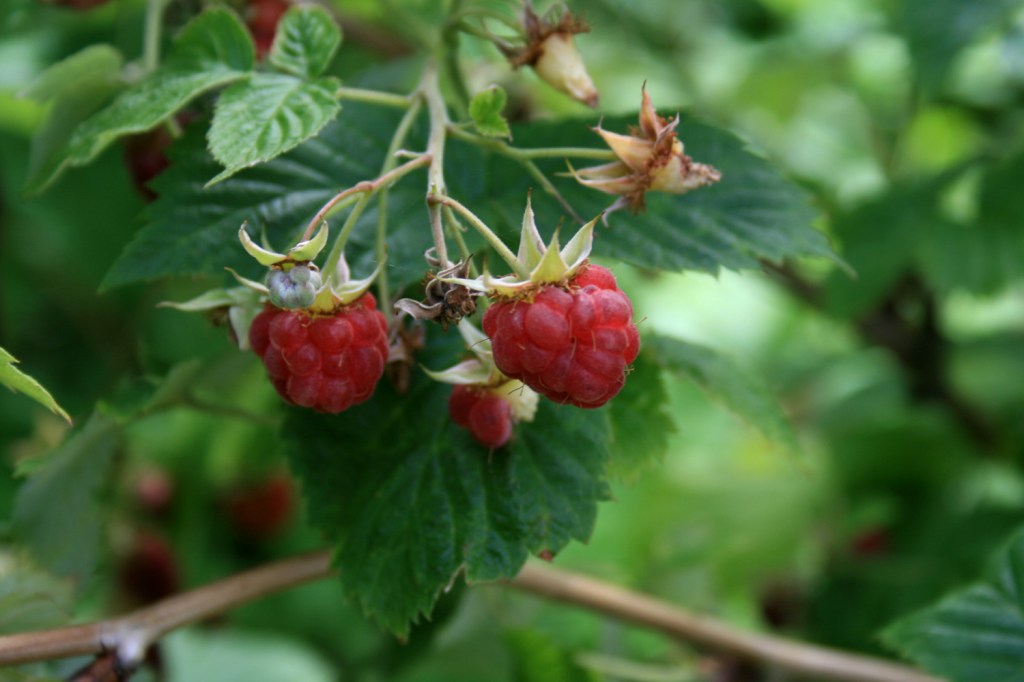
(Rubus idaeus and strigosus)
Rosaceae (Rose family) – perennial or biennial, depending on location
Native to: R. idaeus is native to Eurasia; R. strigosus is native to North America (8)
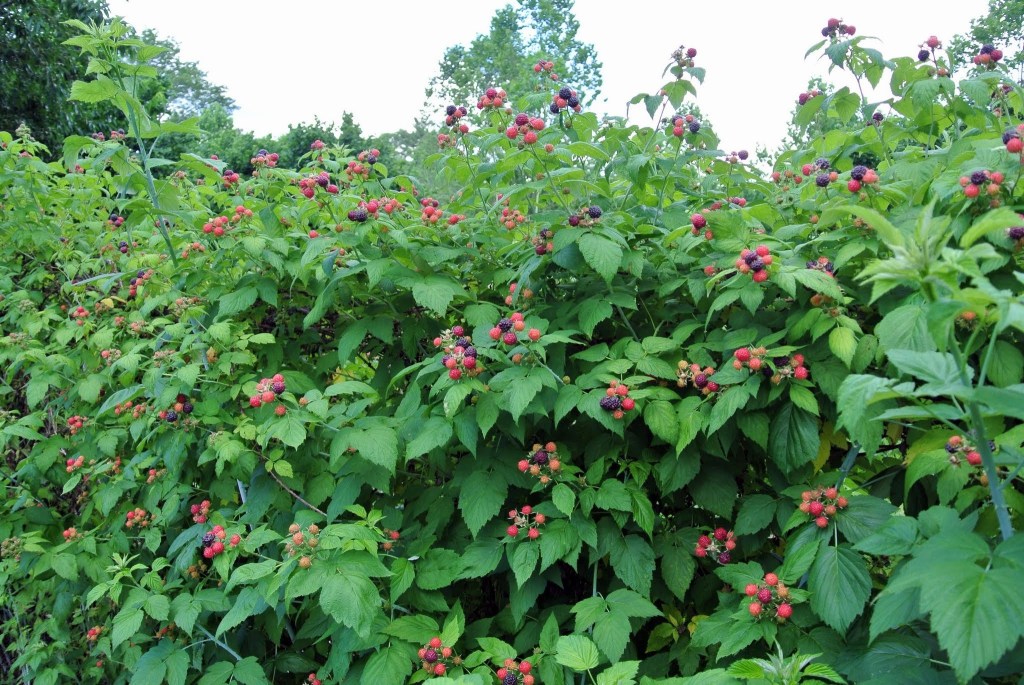
Habitat: Moist to dry soils; lakeshores, meadows, open woods, woodland edges, roadsides, and crossroads (7)
I have found it in city and nature parks within the Twin Cities area. According to MN Wildflowers, they grow throughout the majority of Minnesota (7.)
Parts Used: Modern Western herbalism mainly uses the leaf (5,) however Native American herbalism has records of the whole plant being used (1) which is the main focus of this monograph.
Collection time: Traditionally, the leaves have been harvested before flowering (as some believe the antioxidant content was higher before the plant’s energy was sent to the flowers,) but it is possible to gather them just before berries form, or even through all summer. Some people prefer first year growth leaves (8.) Bioregionally speaking, the bloom occurs from May-July, so one could harvest the leaves up to May, after May & prior to berry formation, and/or til the end of the summer (7.)
Preparations: Can be applied in various forms: infusion, tincture, vinegar, salve, poultice, and capsule (however, this last option is not preferred) (8.) It’s my personal opinion that infusions, as well as glycerites, would be best in the case of suggesting this herb for menstrual-related issues; these two menstruums extract minerals better than others, which is could be supportive both mentally or physically the time of a period, or also leading up to one.
Energetics: Slightly warm, drying
Taste: Sweet, astringent (9)
Tissue State: Damp/relaxation
Actions: astringent, stimulant, digestive remedy, diuretic, laxative, prepares womb for childbirth (6;) antidiarrheal, antiemetic, antioxidant, antiseptic, antispasmodic, cardiac tonic, emmenagogue, febrifuge, galactagogue, refrigerant, stimulant, styptic, tonic (8;)
From a TCM perspective: stabilizes and binds, tonifies Kidney, supports Jing (bind essence,) builds liver and kidney Qi (9)
Main Constituents: Tannins, polypeptides (8,) fragarine (alkaloid that plays a role in raspberry leaf relaxing and toning pelvic and uterine muscles; vitamins and minerals (especially high in calcium, iron, phosphorous, potassium, and vitamin B, C, and E)(4); quercetin, galic acid, folate, magnesium, manganese, biotin
Native American Usage: On the Native American Ethnobotany Database alone, there are recorded traditional uses of raspberry from 30 different tribes, and for many different complaints (as well as a food source.) In that database, there are 3 tribes with known use of raspberry for menstrual/gynecological aids; instead of the leaf, they use the root in this application. Cherokee people made strong root infusions for childbirth and as a cathartic during menstruation; they also used. Cree tribe decocts the stem and upper part of the roots to slow down menstrual bleeding. Lastly, the Iroquois make a compound decoction for those “who are run down from period sickness” (1.)
Folklore/Folk Uses:
The scientific name Rubus idaeus is derived from the Latin for “bramble of Ida,” which comes from legend of Olympian Gods adoring the plant, and picking the berries around Mount Ida. It was found in archaeological dig sites across Asia, Europe, and N. America, suggesting that it was popular amongst Stone Age humans. According to herbalist Ninetta Savino, raspberry juice was thought to give energy to the blood that would carry love, kindness, and nutrition through the body (8.)
Juliet Diaz, author of Plant Witchery, says that the essential properties of this herb are protection, love, and feminine energy. She goes on to say that it has a nurturing quality to it, and can help one cultivate both trust in self and trust in relationships. It also helps to ease various stages of the cycle and functions of a uterus through the years; helping one through periods, childbirth, and menopause. Diaz says the wisdom of raspberry is powerful, and has an equally powerful “healing embrace.” She highlights it as an ally to work with if one wants to heal their womb (either from struggling to conceive, or having experienced sexual abuse.) Regarding dreams, Juliet writes that raspberry’s message is unique to each individual; that it appears in dreams only when “she needs to show you something that will propel your healing or your intentions forward” (4.)
From an astroherbal point of view, this is a Venusian plant; in Culpeper’s Complete Herbal, he writes, “The shrub is owned by Venus” (3.) Many astringents are under the rule of this planet, as well as uterine tonics. Venus is a planet of balance, and through the action of toning tissues, we see how this herb brings the body into more of a balance. Venusian herbs also often have “dainty, delicate, or lush” flowers (2.)
Modern Uses
Raspberry leaves have been used for centuries around the world by various cultures (5.) Today, modern herbalists use it for a variety of health complaints, but in this monograph, I will be focusing on the ovouterine uses; mainly menstrual complaints and childbirth. There is an alkaloid in this herb called fragarine that is partly responsible for its ability to stimulate and relax the uterus, making it an adaptive or amphoteric herb (6.) Many see this plant as a “female herb,” but to speak more neutrally, it is a supportive ally to the uterus. In the 1940s, various prestigious medical journals published reports that extolled the uterine and pelvic actions of this herb, which increased its popularity with Western herbalists of the 20th century. It’s not only recommended for specific times, but said to be a “wonderful nutritive tonic for use during all of the cycles” of life of a person with a uterus (5.)
Fertility + Pregnancy
Multiple sources talk about the various ways raspberry leaf can support someone during pregnancy and childbirth, even stating that it’s been used for this purpose for “thousands of years” (8.) The leaf has been used historically and currently by midwives (8,) and both scientific study and traditional knowledge validate raspberry’s place as an “exceptional aid in pregnancy and childbirth”(5.) It is recommended leading up to giving birth because it preps the pelvic area and uterus for delivery, as well as possibly easing labor and delivery. It also can help with morning sickness and varicose veins during pregnancy (6.) After childbirth, it can help with the toning of the uterus post-birth to bring the organ back to its pre-birth shape (8,) along with aid breastfeeding and prevent colic in the baby (6.) Rosemary Gladstar writes that it is safe enough to be consumed through all 9 months of gestation (5,) while Neal’s Yard Remedies says it is not recommended to take until the last trimester (6.) According to Nicholas Culpeper, raspberry leaf may prevent miscarriage (3.)
It may also be helpful for increasing fertility (6,) as it is an AFAB reproductive tonic; in TCM, its only notable AFAB use is for infertility, specifically caused by cold in the body (9.)
Menstruation
The toning of the uterus and pelvic area are not only supportive of childbirth, but also of menstruation. Its most prominent use in this area seems to be for balancing out excessive bleeding during a period, with one of my sources even saying that it is good to use immediately when heavy bleeding is present (6.) This is mainly due to the astringency of this herb (5.) While being able to lessen bleeding, its amphoteric ability allows it to also promote menstruation when needed, and just generally regulate menses (8.) Other menstrual complaints this herb is indicated for include period pain (6,) PMS systems, and endometriosis.
Works Cited
1. BRIT – Native American Ethnobotany Database. naeb.brit.org/uses/search/?string=rubus%20idaeus&page=1.
2. “Cæleste Natura – Venus Lecture.” Rowan & Sage, 2021.
3. Culpeper, Nicholas. Culpeper’s Complete Herbal: A Compendium of Herbs and Their Uses, Annotated for Modern Herbalists, Healers, and Witches. Microcosm Publishing, 2022.
4. Diaz, Juliet. Plant Witchery: Discover the Sacred Language, Wisdom, and Magic of 200 Plants. Hay House, Inc, 2021.
5. Gladstar, Rosemary. Herbal Healing for Women. Simon and Schuster, 1993.
6. Neal’s Yard Remedies Healing Herbs: Treat Yourself Naturally with Homemade Herbal Remedies. DK Publishing (Dorling Kindersley), 2020.
7. Rubus Idaeus (Wild Red Raspberry): Minnesota Wildflowers. http://www.minnesotawildflowers.info/shrub/wild-red-raspberry.
8. Savino, Ninetta. “Herbal Monograph: Raspberry (Rubus Idaeus).” ash & thorn, 8 Aug.
2016, http://www.ashandthorn.ca/single-post/2016/08/03/Herbal-Monograph-Raspberry-Rubus-idaeus.
9. White Rabbit Institute of Healing. “Raspberry (Fu Pen Zi) | White Rabbit Institute of Healing.” White Rabbit Institute of Healing, 26 Mar. 2025, http://www.whiterabbitinstituteofhealing.com/herbs/raspberry.